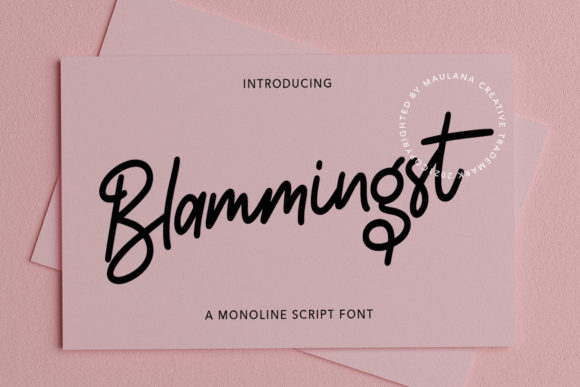
Blammingst: A Script Font for Professional Branding
As a small business owner, you know that first impressions are often visual. Before a customer reads your product description or hears your pitch, they see your brand. This is why choosing the right typeface is not just a design detail; it is a critical business decision. Enter Blammingst, an elegant script font that bridges the gap between artistic flair and professional reliability. If you are looking to elevate your brand identity without sacrificing clarity, this contemporary script might be the missing piece in your design toolkit.
Why Visual Consistency Builds Trust
In the crowded marketplace of online selling and local services, consistency is currency. When your Instagram posts, packaging labels, and website headers all speak the same visual language, you build recognition. Customers begin to trust brands that look put-together. Blammingst offers a contemporary atmosphere with impeccable form, inspired by timeless classic calligraphy. It is not too thin, which ensures it remains legible on digital screens, and not too thick, which prevents it from looking heavy or clumsy on small product labels.
This balance is rare in the world of Script Amp and Fonts. Many decorative options lean too far into illegibility or generic simplicity. Blammingst sits comfortably in the middle, offering varied stroke weights that mimic natural handwriting while maintaining the structural integrity needed for commercial use. For entrepreneurs, this means you can use it across various touchpoints—from business cards to large banners—without worrying that the font will break down or look unprofessional at different sizes.
Real-World Applications for Your Business
So, where exactly does Blammingst fit into your daily operations? Let’s look at practical scenarios where this premium font can enhance your customer-facing materials.
- Product Packaging and Labels: If you sell handmade candles, artisanal soaps, or boutique clothing, the label is your silent salesperson. Blammingst works beautifully as a display font for product names. Its elegant curves suggest quality and care, making a simple jar feel like a luxury item.
- Social Media Graphics: On platforms like Instagram and Pinterest, visuals stop the scroll. Use Blammingst for quote graphics, sale announcements, or introductory posts. Because it has a modern typography feel, it appeals to contemporary audiences while retaining a human touch.
- Website Headers and Banners: Your homepage hero section needs to grab attention immediately. Using Blammingst for your main headline can set a welcoming, sophisticated tone. However, keep body text in a simpler typeface to ensure readability.
- Printed Collateral: From thank-you cards included in shipments to flyers for local events, this creative font adds a personal signature vibe. It makes mass-produced items feel handcrafted and special.
Pairing Blammingst for Maximum Impact
A common mistake new entrepreneurs make is using a decorative script for everything. This leads to visual fatigue and reduced readability. The key to effective brand identity is contrast. Blammingst shines when paired with clean, neutral typefaces.
Consider pairing this handwritten font with a geometric sans serif font. The sharp, clean lines of a sans serif provide a stable foundation that allows the flowing curves of Blammingst to stand out without competing. For example, if you are designing a menu for a café, use Blammingst for the category headers like "Specials" or "Desserts," but use a readable sans serif for the item descriptions and prices. This hierarchy guides the customer’s eye and ensures they can easily find the information they need.
Alternatively, if your brand leans more traditional or academic, such as a coaching business or a legal consultancy, pair Blammingst with a classic serif font. The serif adds authority and tradition, while Blammingst injects warmth and approachability. This combination tells customers that you are professional but also personable.
Readability and Practical Testing
Before you commit to Blammingst as your primary logo design element or go-to design assets choice, you must test it in real-world conditions. A font might look stunning on a large desktop monitor but become illegible on a mobile phone screen or a small sticker.
Print a sample label at the actual size you intend to use. Can you read the text from arm's length? Check how it looks in black and white, as many shipping labels and receipts are printed in monochrome. Ensure the delicate parts of the script do not disappear. Blammingst is designed with balanced thickness, which helps, but testing is non-negotiable for physical products.
Also, consider your target demographic. If your audience is primarily older adults, ensure the font size is large enough to be easily deciphered. For younger, digital-native audiences, the aesthetic appeal may take precedence, but clarity should never be fully sacrificed for style.
Licensing and Professional Responsibility
As a business owner, protecting your brand includes respecting intellectual property. Always verify the licensing terms before using Blammingst or any other commercial font. Standard personal licenses often do not cover use on products for sale, such as t-shirts, mugs, or physical goods. You may need a specific commercial license for packaging design, merchandise, or client work.
Using properly licensed Fonts protects your business from legal issues and supports the designers who create these tools. It is a small investment that secures your brand’s long-term viability. Whether you are creating digital downloads, updating your web design, or printing thousands of units, ensure your usage rights align with your business activities.
Ultimately, Blammingst is more than just a collection of letters; it is a tool for communication. By choosing a typeface that balances elegance with functionality, you signal to your customers that you value quality and attention to detail. In a world where consumers are bombarded with choices, a cohesive, professional, and trustworthy visual identity can be the deciding factor that turns a browser into a loyal buyer.